
Look, hear me out before you click away—especially since you're reading this on a gaming blog. 😅 The truth is, there are real, legitimate reasons why people argue that video games are a waste of time. Understanding those arguments actually helps us be more intentional about how we game. And being intentional is what separates a healthy hobby from a bad habit.
So let's take an honest look at 9 reasons why some people believe video games are a waste of time. And at the end, I'll share my own take on all of it.
1. Time Flies—and Not Always in a Good Way
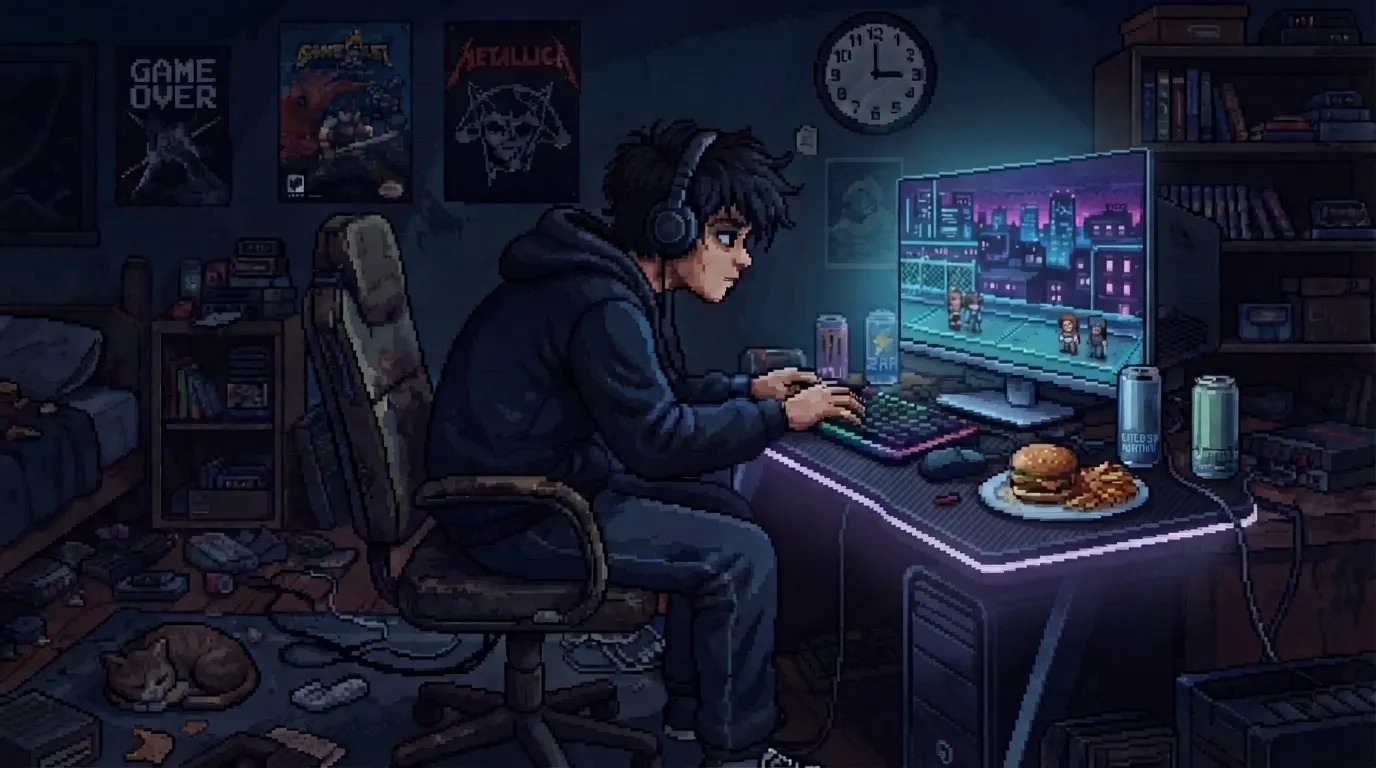
Games are designed to be engaging. One "quick session" turns into five hours, and suddenly it's 3 AM and you have work in four hours. That kind of time loss compounds quickly. Missed responsibilities, lost sleep, neglected relationships—the real-world costs of unmanaged gaming add up fast.
This isn't a knock on games. It's just the reality of a hobby that's very good at keeping you engaged. The same thing happens with binge-watching TV—but games are even more deliberately designed to keep you in the loop.
Solution: Turn off or put down the console, and do something else that isn't gaming-related. [Related: Gaming Burnout in Adulthood: Causes and Comeback Strategies]
2. It Encourages a Sedentary Lifestyle
Most gaming happens sitting down—often for extended periods. Prolonged inactivity is linked to a long list of health issues: obesity, poor posture, back pain, cardiovascular problems, and more. Combined with the fact that many of us already sit at desks for work, gaming can push an already sedentary lifestyle into genuinely unhealthy territory.
The fix isn't to stop gaming—it's to build in movement. But many gamers don't, and the body feels it over time.
Solution: Start an active lifestyle. Begin by tracking your steps. Start with an additional 1k, then 2k, until you eventually reach 10k steps per day.
3. The Reward Loops Are Designed to Be Addictive
Loot drops, experience points, level-ups, daily login bonuses, streak rewards, platinum trophies, and so on—none of these systems are accidental. They're designed by teams of people who study behavioral psychology and know exactly how to trigger dopamine responses. For most players, this is fine. But for some—especially younger or more vulnerable players—those reward loops can tip into compulsive behavior. This easily burns hundreds of hours of your life.
The World Health Organization officially recognized Gaming Disorder in 2019. That doesn't mean games are evil, but it does mean the addictive design is real.
Solution: Don’t get too obsessive about earning every trophy—just finish the story and move on.
4. The Opportunity Cost Is Significant
Here's the core of the argument: every hour gaming is an hour not spent doing something else. Learning a language, building a business, exercising, developing a career skill, deepening a relationship. Time is finite, and gaming competes with everything else you could be investing it in.
This isn't unique to gaming—it applies to any leisure activity. But because games are particularly good at consuming large blocks of time, the opportunity cost is worth acknowledging honestly.
Solution: Make sure to intentionally allocate time for improving yourself for at least 15-30 minutes. Learn a skill, read a book, do a hobby, etc.
5. Modern Games Are Increasingly Designed to Extract Money
A lot of modern gaming has shifted from "pay once, enjoy forever" to aggressive monetization: microtransactions, battle passes, loot boxes, season passes, cosmetic stores. When you're regularly spending real money on digital items that provide no lasting satisfaction—or worse, on gambling mechanics dressed up as fun—the value equation starts to look pretty bleak.
The joy of gaming can get buried under the pressure to spend. And that's a legitimate criticism of where the industry has gone.
Solution:
- Allocate a monthly budget for your gaming purchases. Try reducing an expensive activity like coffee or liquor, and shift to buying video games.
- Find an extra income that will cover your gaming expenses. [Related: 20+ Great Ways to Make Money through Gaming]
6. Progress Doesn't Transfer to Real Life
Unlike reading, learning an instrument, or physical training, most in-game progress exists only inside the game. The hours you spent building your character, grinding gear, or ranking up—when the game shuts down or you move on, it's gone. There's nothing to show for it in the physical world.
That's not inherently wrong—entertainment doesn't need to be productive. But it's worth being honest that gaming time, by default, doesn't generate transferable skills the way other hobbies might.
Solution: Start a hobby and simply track your progress. For example, keep a journal and write every day. Eventually you’ll notice that you’re gaining weekly, monthly, quarterly, and even yearly streaks. It’s also a great way to record your life’s daily activities.
7. It Can Replace Real-World Social Connection
Online gaming connects people globally, and that's genuinely great. But it can also become a substitute for face-to-face interaction rather than a supplement to it. Kids and teens especially can find it easier to retreat into a headset than to navigate the messiness of real-world relationships—and that avoidance, over time, stunts social development.
Multiplayer gaming is a social activity. But it's not the same as sharing physical space with people who care about you.
Solution: Go out and meet new people. Join a club, a community, a church, or a gym—somewhere people hang out regularly. You'll meet fellow gamers with different interests too!
8. Late-Night Gaming Destroys Sleep
Screens emit blue light that suppresses melatonin. Stimulating games keep the brain in a heightened, alert state. And "just one more hour" logic is uniquely powerful when you're mid-game. The result: chronic late nights, disrupted sleep cycles, and the cascade of mental and physical problems that follow.
Poor sleep is one of the most underappreciated health risks in gaming culture, and it's a very real one.
Solution: Play on a strict schedule, and when time's up, turn it off and prioritize your health. Trust me—take care of yourself before it's too late. There's no respawn in real life.
9. The Forever Backlog Cycle Is Genuinely Frustrating
This one hits close to home—I know I'm not alone here. 😅 Many gamers buy games faster than they play them. The backlog grows, the guilt compounds, sales add more games you'll never touch, and nothing ever feels fully completed or savored. That cycle of accumulating without actually enjoying starts to feel hollow.
A famous justification is “I’m buying for retirement,” which isn’t true. New games will always come, and eventually you won’t have time to play all of them.
Gaming becomes a checklist instead of a pleasure. And that's the opposite of what it should be.
Solution: Play one game at a time. Make a list of the games that you will finish, and start playing them. Disregard FOMO and the hype for upcoming games for now, and focus on crossing off your backlog list.
In Summary
I love gaming—that's why this blog exists. But pretending the criticisms above aren't valid doesn't help anyone. They're real. The goal isn't to stop gaming. It's to game intentionally.
When you control how, when, and how much you play—when you choose games that genuinely bring you joy rather than just filling time—gaming stops being a "waste" and becomes one of the most rewarding hobbies in the world. 🎮
Have any of these hit close to home for you? Let me know in the comments below!
Recommended Reading:
39 Great Games That Must Have a Film Adaptation (series, movie or anime)
From Shelf to Server: The Inevitable Death of Physical Games


.png)